Wednesday, 18 September 2019
Monday, 10 June 2019
Thursday, 14 March 2019
How to Add HIIT to Your Workouts — the Right Way
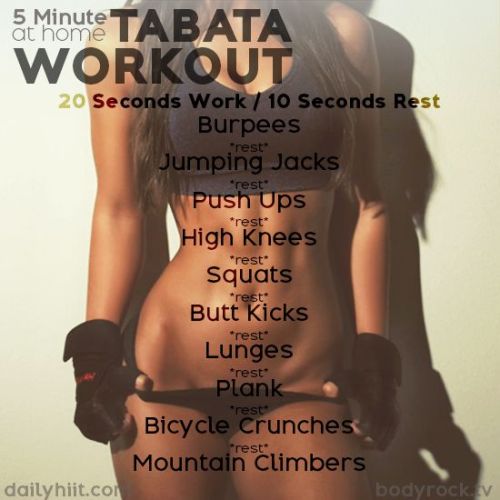
Tabata Circuits
Full article : link
Ditch the
treadmill and use your own body. Each exercise is done for 20 seconds
with 10-second rest in between. This style of training was shown to be equally effective as traditional HIIT sprint workouts.
You'll perform a maximum of 8 sets of 20 seconds on, 10 seconds off.
It’s not for the faint of heart, but if you have a cardio machine
phobia, it does the job. Some movements for your Tabata training:
- High-knee running
- Squat jumps
- Mountain climbers
- Burpees
There’s
no need to duplicate the exact exercises used here, either. Full-body
exercises of any kind should substitute just fine. You can also
incorporate weights for an additional challenge.
Thursday, 31 January 2019
Get Sweaty and Torch Calories Anytime, Anywhere With These 8 Tabata Apps
Tabata burns calories and forces you to really work. It's a form of high-intensity interval training — short bursts of activity performed at close to your max capacity followed by even shorter rest periods — proven to shed fat and benefit cardiovascular health.
Tabata specifically follows intervals of 20 seconds on, working as hard as you can, followed by 10 seconds off for four minutes. Each four-minute round of, let's say, burpees consists of eight sets. Sounds fun, right?
Full article : link
Tabata specifically follows intervals of 20 seconds on, working as hard as you can, followed by 10 seconds off for four minutes. Each four-minute round of, let's say, burpees consists of eight sets. Sounds fun, right?
Full article : link
Friday, 18 May 2018
This Bodyweight Tabata Workout from Shaun T Is the Ultimate HIIT Routine
Extract:
New science behind HIIT keeps proving it’s one amazingly effective drill. Here’s exactly how to tap its potent benefits to transform your fitness
Full article : link
How much HIIT does it take to level up and also change your body composition? (And should you be doing Tabata training every day?) According to a new review of 65 HIIT studies in the British Journal of Sports Medicine, three times a week does it if you keep at it 12-plus weeks. Start your HIIT habit here. Try the Tabata session below from Insanity creator Shaun T. Here's how: Perform each move for 20 seconds (take note of whether you need to repeat on the opposite side), and rest for 10 seconds between each exercise. Repeat exercises as prescribed for a complete 4-minute Tabata workout.
New science behind HIIT keeps proving it’s one amazingly effective drill. Here’s exactly how to tap its potent benefits to transform your fitness
Full article : link
How much HIIT does it take to level up and also change your body composition? (And should you be doing Tabata training every day?) According to a new review of 65 HIIT studies in the British Journal of Sports Medicine, three times a week does it if you keep at it 12-plus weeks. Start your HIIT habit here. Try the Tabata session below from Insanity creator Shaun T. Here's how: Perform each move for 20 seconds (take note of whether you need to repeat on the opposite side), and rest for 10 seconds between each exercise. Repeat exercises as prescribed for a complete 4-minute Tabata workout.
Thursday, 26 April 2018
The 20-minute HIIT circuit that will get you fighting fit
In this article, author explains "High-Intensity Interval Training will get you both shredded in less time than your morning commute".
Extract:
HIIT — high-intensity interval training — is a combination of
high-octane bursts of intense exercise followed by low-intensity short
rest. According to the Academy of Sports Medicine, the benefits of HIIT
range from lowering cholesterol and improving blood pressure to lowering
body fat and maintaining muscle mass. A 20-minute workout such as
Musico’s can burn as many as 250 calories, and with HIIT’s ability to raise metabolism levels, you’ll burn fat long after you’ve taken off the gloves and gone back to checking your work emails.
Sunday, 11 February 2018
New to Tabata? This Workout Is For You
In this article, mostly oriented for beginners, you will discover the ABC of Tabata.
Exercises might not be intense enough to reach the 170% of VO2Max but it's a first step!
Extract:
The fitness world is full of jargon, but one word you need in your gym vocabulary is Tabata. The first thing to know is that it's a type of HIIT workout, aka high-intensive interval training. These workouts are designed to push you a bit out of your comfort zone, but they're great for revving up your metabolism. A four-minute Tabata round alternates between 20-second work intervals, followed by 10 seconds of rest. You repeat this on-off pattern a total of eight times. You can stack Tabata rounds to create longer workouts, resting one to two minutes between rounds.
Link
Exercises might not be intense enough to reach the 170% of VO2Max but it's a first step!
Extract:
The fitness world is full of jargon, but one word you need in your gym vocabulary is Tabata. The first thing to know is that it's a type of HIIT workout, aka high-intensive interval training. These workouts are designed to push you a bit out of your comfort zone, but they're great for revving up your metabolism. A four-minute Tabata round alternates between 20-second work intervals, followed by 10 seconds of rest. You repeat this on-off pattern a total of eight times. You can stack Tabata rounds to create longer workouts, resting one to two minutes between rounds.
Link
Wednesday, 7 February 2018
Celebrity Trainer Vinod Channa Recommends The Tabata Workout For People Short Of Time
In this article:
Tabata training was discovered by Japanese scientist Dr. Izumi Tabata
and a team of researchers from the National Institute of Fitness and
Sports in Tokyo.
Tabata and his team concluded in their research that high-intensity interval training has more impact on both the aerobic and anaerobic systems. This is because short interval between the exercises utilises maximum oxygen and gives you good intensity of workout at home. This cardio-based workout helps you burn more calories and improves your fitness levels.
Tabata workout includes high-intensity interval training which has more impact on both the aerobic and anaerobic systems.
Tabata technique of workout can be done at home as well
HIGHLIGHTS
- Tabata training is a cardio-based workout
- 3 sets of exercises need to be completed in a 12-minute schedule
- Make sure to cover maximum body parts in the 12-minute schedule
Tabata and his team concluded in their research that high-intensity interval training has more impact on both the aerobic and anaerobic systems. This is because short interval between the exercises utilises maximum oxygen and gives you good intensity of workout at home. This cardio-based workout helps you burn more calories and improves your fitness levels.
Saturday, 6 May 2017
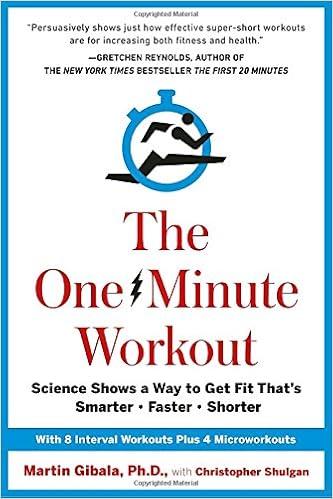
Must read: the one minute workout by Martin Gibala!
Finally one compelling book, backed by science and research and personal experiments, which explains why HIIT is so potent.
More interestingly, Martin Gibala gives examples of HIIT training, with clear explanations.
For people who are looking for time efficiency for their training, proven results and easy to follow protocols, this is a must read!
https://www.amazon.com/One-Minute-Workout-Science-Smarter-Shorter/dp/0399183663
More interestingly, Martin Gibala gives examples of HIIT training, with clear explanations.
For people who are looking for time efficiency for their training, proven results and easy to follow protocols, this is a must read!
https://www.amazon.com/One-Minute-Workout-Science-Smarter-Shorter/dp/0399183663
Wednesday, 26 April 2017
Back to VO2MAX:60 thanks to Tabata!
Vo2Max is "the maximum or optimum rate at which the heart, lungs, and muscles
can effectively use oxygen during exercise, used as a way of measuring a
person's individual aerobic capacity."
"VO2max is a valid index measuring the limits of the cardiorespiratory systems' ability to transport oxygen from the air to the tissues at a given level of physical conditioning and oxygen availability." (link)
It is an important indicator of your level of fitness and expected level of performance, albeit not the only one of course and more or less important depending on your favorite sport and distance.
Your VO2max decreases when you are aging, but if you train regularly and with intensity (think Tabata and HIIT) you can slow down the process.
Here is an example of ratings (link):
To measure my VO2max, I'm testing myself regularly with Cooper test (12mn running) or using my cardio Polar. Results work well for me. At least it gives you a trend (eg you can compare the numbers).
When I was training for Triathlon and 70.3 distance Ironman, I could have a regimen of swimming / cycling / running up to 12-14h per week. During this period, my VO2Max was always between 58-60.
Whilst changing job, traveling a lot, and most importantly becoming a father of a wonderful little boy, time for training has shortened dramatically.
I've also give up on the bike for a while, thus making harder to build the "base" endurance. My VO2max went south in the 55 area (which is still considered a good level for >40 years old).
Recently, I've increased intensity to my regimen, I've added frequency of Tabata training and incorporated back to back sessions (eg 1 Tabata 4 minutes, 1 minute rest, 1 other Tabata 4 minutes).
After a couple of (intense) weeks of training, coupled with a diet (aging process has also its effects!), I'm back now to a VO2 max of 60 at 42 years old next month. More details later :-)
"VO2max is a valid index measuring the limits of the cardiorespiratory systems' ability to transport oxygen from the air to the tissues at a given level of physical conditioning and oxygen availability." (link)
It is an important indicator of your level of fitness and expected level of performance, albeit not the only one of course and more or less important depending on your favorite sport and distance.
Your VO2max decreases when you are aging, but if you train regularly and with intensity (think Tabata and HIIT) you can slow down the process.
Here is an example of ratings (link):
| Age (years) | ||||||
|---|---|---|---|---|---|---|
| rating | 18-25 | 26-35 | 36-45 | 46-55 | 56-65 | 65+ |
| excellent | > 60 | > 56 | > 51 | > 45 | > 41 | > 37 |
| good | 52-60 | 49-56 | 43-51 | 39-45 | 36-41 | 33-37 |
| above average | 47-51 | 43-48 | 39-42 | 36-38 | 32-35 | 29-32 |
| average | 42-46 | 40-42 | 35-38 | 32-35 | 30-31 | 26-28 |
| below average | 37-41 | 35-39 | 31-34 | 29-31 | 26-29 | 22-25 |
| poor | 30-36 | 30-34 | 26-30 | 25-28 | 22-25 | 20-21 |
| very poor | < 30 | < 30 | < 26 | < 25 | < 22 | < 20 |
To measure my VO2max, I'm testing myself regularly with Cooper test (12mn running) or using my cardio Polar. Results work well for me. At least it gives you a trend (eg you can compare the numbers).
When I was training for Triathlon and 70.3 distance Ironman, I could have a regimen of swimming / cycling / running up to 12-14h per week. During this period, my VO2Max was always between 58-60.
Whilst changing job, traveling a lot, and most importantly becoming a father of a wonderful little boy, time for training has shortened dramatically.
I've also give up on the bike for a while, thus making harder to build the "base" endurance. My VO2max went south in the 55 area (which is still considered a good level for >40 years old).
Recently, I've increased intensity to my regimen, I've added frequency of Tabata training and incorporated back to back sessions (eg 1 Tabata 4 minutes, 1 minute rest, 1 other Tabata 4 minutes).
After a couple of (intense) weeks of training, coupled with a diet (aging process has also its effects!), I'm back now to a VO2 max of 60 at 42 years old next month. More details later :-)
Sunday, 16 April 2017
Wednesday, 15 March 2017
Thursday, 19 January 2017
Actor Pierre Png loves ballet and unicycling
Real people are using Tabata for real results!
Extract:
"Q What do you do to keep fit?
A I go for two-hour ballet classes twice a week, do
tabata workouts and swim. Tabata training is a high-intensity interval
training workout that features four- minute-long exercises.
When I swim, I usually do a few sets, starting with six laps and
finishing with a set of 10 laps. Between the sets, I will do 20
push-ups. Due to my working hours, I usually exercise at night. I do it to burn excess energy and also because I feel it completes my day."
Full article : link
Need for speed: can you get fit in 15 minutes?
Link:
https://inews.co.uk/essentials/lifestyle/need-speed-can-get-fit-15-minutes/
Super-quick fitness
classes are all the rage among the time-poor, but it’s not an easy short
cut – every second counts if you want to see results
Read more at: https://inews.co.uk/essentials/lifestyle/need-speed-can-get-fit-15-minutes/
Super-quick fitness
classes are all the rage among the time-poor, but it’s not an easy short
cut – every second counts if you want to see results
“I don’t have time” is one of the top excuses for not exercising, and
usually why fitness-related new-year resolutions fail before the month
is out. But with more gyms introducing super-short lunchtime classes and
apps such as The 7-Minute Workout, it seems that this excuse is no
longer valid.
The idea of getting fit in less time than it takes to shower is
certainly an attractive one, but how valid is it? And if seven-minute
sessions are all we need, what the hell are all those marathon gym-goers
up to?
It turns out that even seven minutes may be a bit too generous. A study
published last year in the journal PLOS One found that 60 seconds of
all-out exercise may have the same health benefits for your heart,
muscles and respiratory system as 45 minutes of more typical, continuous
exercise over three months. The catch? All out really means all out:
you have to push yourself to your limits for that one minute.
Tabata
This isn’t the first study to alight on the notion of super-charging
your workout. Tabata training is the concept of training at different
levels of intensity to maximise results. Developed by Professor Izumi
Tabata as part of a Japanese study of speed-skaters in 1996, the regime
involves 20 seconds of ultra-intensity exercise followed by 10 seconds
of rest over eight cycles (four minutes).
It is just one type of “high-intensity interval training”, or HIIT.
These intervals of high-octane anaerobic exercise with recovery in
between typically bring about faster glucose metabolism (calorie
burning), and improved fitness levels. HIIT’s time-intensive nature has
made it popular with fitness gurus like the Body Coach, Joe Wicks, whose
HIIT home workout has had more than two million views on YouTube.
“The key to having an effective workout in a short space of time is all
about getting the intensity, exercise selection and the programming
right,” says Matt Bolam, a personal trainer at the gym chain Speedflex
Read more at: https://inews.co.uk/essentials/lifestyle/need-speed-can-get-fit-15-minutes/
Super-quick fitness
classes are all the rage among the time-poor, but it’s not an easy short
cut – every second counts if you want to see results
“I don’t have time” is one of the top excuses for not exercising, and
usually why fitness-related new-year resolutions fail before the month
is out. But with more gyms introducing super-short lunchtime classes and
apps such as The 7-Minute Workout, it seems that this excuse is no
longer valid.
The idea of getting fit in less time than it takes to shower is
certainly an attractive one, but how valid is it? And if seven-minute
sessions are all we need, what the hell are all those marathon gym-goers
up to?
It turns out that even seven minutes may be a bit too generous. A study
published last year in the journal PLOS One found that 60 seconds of
all-out exercise may have the same health benefits for your heart,
muscles and respiratory system as 45 minutes of more typical, continuous
exercise over three months. The catch? All out really means all out:
you have to push yourself to your limits for that one minute.
Tabata
This isn’t the first study to alight on the notion of super-charging
your workout. Tabata training is the concept of training at different
levels of intensity to maximise results. Developed by Professor Izumi
Tabata as part of a Japanese study of speed-skaters in 1996, the regime
involves 20 seconds of ultra-intensity exercise followed by 10 seconds
of rest over eight cycles (four minutes).
It is just one type of “high-intensity interval training”, or HIIT.
These intervals of high-octane anaerobic exercise with recovery in
between typically bring about faster glucose metabolism (calorie
burning), and improved fitness levels. HIIT’s time-intensive nature has
made it popular with fitness gurus like the Body Coach, Joe Wicks, whose
HIIT home workout has had more than two million views on YouTube.
“The key to having an effective workout in a short space of time is all
about getting the intensity, exercise selection and the programming
right,” says Matt Bolam, a personal trainer at the gym chain Speedflex
Read more at: https://inews.co.uk/essentials/lifestyle/need-speed-can-get-fit-15-minutes/
Super-quick fitness
classes are all the rage among the time-poor, but it’s not an easy short
cut – every second counts if you want to see results
“I don’t have time” is one of the top excuses for not exercising, and
usually why fitness-related new-year resolutions fail before the month
is out. But with more gyms introducing super-short lunchtime classes and
apps such as The 7-Minute Workout, it seems that this excuse is no
longer valid.
The idea of getting fit in less time than it takes to shower is
certainly an attractive one, but how valid is it? And if seven-minute
sessions are all we need, what the hell are all those marathon gym-goers
up to?
It turns out that even seven minutes may be a bit too generous. A study
published last year in the journal PLOS One found that 60 seconds of
all-out exercise may have the same health benefits for your heart,
muscles and respiratory system as 45 minutes of more typical, continuous
exercise over three months. The catch? All out really means all out:
you have to push yourself to your limits for that one minute.
Tabata
This isn’t the first study to alight on the notion of super-charging
your workout. Tabata training is the concept of training at different
levels of intensity to maximise results. Developed by Professor Izumi
Tabata as part of a Japanese study of speed-skaters in 1996, the regime
involves 20 seconds of ultra-intensity exercise followed by 10 seconds
of rest over eight cycles (four minutes).
It is just one type of “high-intensity interval training”, or HIIT.
These intervals of high-octane anaerobic exercise with recovery in
between typically bring about faster glucose metabolism (calorie
burning), and improved fitness levels. HIIT’s time-intensive nature has
made it popular with fitness gurus like the Body Coach, Joe Wicks, whose
HIIT home workout has had more than two million views on YouTube.
“The key to having an effective workout in a short space of time is all
about getting the intensity, exercise selection and the programming
right,” says Matt Bolam, a personal trainer at the gym chain Speedflex
Read more at: https://inews.co.uk/essentials/lifestyle/need-speed-can-get-fit-15-minutes/
Super-quick fitness
classes are all the rage among the time-poor, but it’s not an easy short
cut – every second counts if you want to see results
“I don’t have time” is one of the top excuses for not exercising, and
usually why fitness-related new-year resolutions fail before the month
is out. But with more gyms introducing super-short lunchtime classes and
apps such as The 7-Minute Workout, it seems that this excuse is no
longer valid.
The idea of getting fit in less time than it takes to shower is
certainly an attractive one, but how valid is it? And if seven-minute
sessions are all we need, what the hell are all those marathon gym-goers
up to?
It turns out that even seven minutes may be a bit too generous. A study
published last year in the journal PLOS One found that 60 seconds of
all-out exercise may have the same health benefits for your heart,
muscles and respiratory system as 45 minutes of more typical, continuous
exercise over three months. The catch? All out really means all out:
you have to push yourself to your limits for that one minute.
Tabata
This isn’t the first study to alight on the notion of super-charging
your workout. Tabata training is the concept of training at different
levels of intensity to maximise results. Developed by Professor Izumi
Tabata as part of a Japanese study of speed-skaters in 1996, the regime
involves 20 seconds of ultra-intensity exercise followed by 10 seconds
of rest over eight cycles (four minutes).
It is just one type of “high-intensity interval training”, or HIIT.
These intervals of high-octane anaerobic exercise with recovery in
between typically bring about faster glucose metabolism (calorie
burning), and improved fitness levels. HIIT’s time-intensive nature has
made it popular with fitness gurus like the Body Coach, Joe Wicks, whose
HIIT home workout has had more than two million views on YouTube.
“The key to having an effective workout in a short space of time is all
about getting the intensity, exercise selection and the programming
right,” says Matt Bolam, a personal trainer at the gym chain Speedflex
Read more at: https://inews.co.uk/essentials/lifestyle/need-speed-can-get-fit-15-minutes/
Saturday, 12 November 2016
High intensity interval training is quick and effective
Extract:
"HIIT is an efficient way to push the body and the heart rate in a very short amount of time.
But HIIT has to be done in a very specific way: All out.
Think of running from the dinosaurs in Jurassic Park kind of effort.
"You
would have to push yourself to the extreme for that one minute," Hall
said. "You're pushing yourself to like, 'I can barely do any more.' "
One
of the more well-known examples of HIIT is Tabata. It's real simple: 20
seconds of all-out work in an exercise, followed by 10 seconds of rest,
for eight rounds. It sounds like nothing, right? - 4 minutes - until
you do it.
An example would be to do burpees and speed skaters for
20 seconds, alternating between the two, with 10-second rests in
between. If you go as fast as possible and do the full range of motion
(not half jumps), you'll be tired and your heart rate will be high.
Other intervals might be for 30 seconds or 45 seconds followed by a 15-second rest.
If
you start hearing someone talk about 60- or 90-second HIIT intervals,
or if you try to do them and see the effort fall off, it's time to
question if that is HIIT training. It's still good work, of course - but
probably not HIIT.
"I don't know if people can sustain that type
of intensity for 90 seconds - that's really long," Hall said. "I'm not
sure if you can get to your max and hold that for 90 seconds. You want
to feel like you can barely do any more, not that you're plodding
along."
Full article: link
Thursday, 3 November 2016
What Exactly Is HIIT—And How Can You Tell If You’re Actually Doing It?
Extract :
If you work out, or if you talk to people who work out, you're most definitely familiar with high-intensity interval training (HIIT), and you probably associate it with sweating, panting, and burpees—lots of burpees. It's intense, you do various moves at intervals, and it's training. Name says it all, right?
Well, actually it doesn't. There's a lot more to HIIT than its name alone suggests. We're going to help you read between the letters. Here, fitness pros share the must-know HIIT facts so you can torch calories, burn fat, and build muscle effectively.
Intensity is key—obviously—which means you really have to work.
HIIT is a cardio session arranged as short bursts of very hard work. The whole point of high-intensity training is to kick up the intensity of your cardio. In order to qualify as true HIIT, you’ll need to push yourself to the max during every set. That’s why they’re short—anywhere from 20 to 90 seconds, typically. It’s the opposite of going for a long run where you ration your energy in order to sustain the activity for longer.
Numerous studies have shown that working your hardest is key when it comes to boosting endurance, increasing metabolism, regulating insulin levels, and losing body fat. “All exercise helps burn fat by burning calories,” says fitness expert and celebrity trainer Rob Sulaver. But, he adds, “more intense exercise burns more fat,” and that's part of the reason HIIT is so popular.
And compared to many other cardio workouts, HIIT can be a more effective way of getting shredded, Sulaver explains. HIIT routines that involve bodyweight work (e.g. push-ups) or added weight, such as kettlebells, medicine balls, or dumbbells, will tone your muscles while spiking your heart rate. “HIIT is effective on multiple fronts. It’ll improve your endurance, it will complement your strength development, and it’ll help you get shredded,” he says.
Well, actually it doesn't. There's a lot more to HIIT than its name alone suggests. We're going to help you read between the letters. Here, fitness pros share the must-know HIIT facts so you can torch calories, burn fat, and build muscle effectively.
Intensity is key—obviously—which means you really have to work.
HIIT is a cardio session arranged as short bursts of very hard work. The whole point of high-intensity training is to kick up the intensity of your cardio. In order to qualify as true HIIT, you’ll need to push yourself to the max during every set. That’s why they’re short—anywhere from 20 to 90 seconds, typically. It’s the opposite of going for a long run where you ration your energy in order to sustain the activity for longer.
Numerous studies have shown that working your hardest is key when it comes to boosting endurance, increasing metabolism, regulating insulin levels, and losing body fat. “All exercise helps burn fat by burning calories,” says fitness expert and celebrity trainer Rob Sulaver. But, he adds, “more intense exercise burns more fat,” and that's part of the reason HIIT is so popular.
And compared to many other cardio workouts, HIIT can be a more effective way of getting shredded, Sulaver explains. HIIT routines that involve bodyweight work (e.g. push-ups) or added weight, such as kettlebells, medicine balls, or dumbbells, will tone your muscles while spiking your heart rate. “HIIT is effective on multiple fronts. It’ll improve your endurance, it will complement your strength development, and it’ll help you get shredded,” he says.
Full Article : link
The Quick and Effective Workout That Burns an Insane Amount of Fat
Extract
If you’re in the market for a new workout, you may want to try the Tabata workout (like we need another type of exercise to worry about!). A celebrity favorite that falls into the high-intensity interval training (HIIT) category, the quick yet effective workout, which hails from Japan, is also said by many to be one of the hardest they’ve ever done, simply because it involves going all out for short bursts of time.
Like any other type of HIIT exercise, New York trainer Terrence Walcott says you’re expected to complete a work set at your maximum ability followed by a rest set, only to complete a work set with an intensity as strenuous as the previous set.
New York trainer Trevor Swaine describes it like pushing your body to the point of near failure and only give it seconds to recover. “You may feel fatigue and exhaustation with a Tabata workout, which is common, but there’s also a great release of endorphins at the end of the workout.” And, in terms of the results, you can expect to see your metabolism kicked into high gear (not just during the day or training, but for the next day, too) and to break through mental and physical plateaus.
Like any other type of HIIT exercise, New York trainer Terrence Walcott says you’re expected to complete a work set at your maximum ability followed by a rest set, only to complete a work set with an intensity as strenuous as the previous set.
New York trainer Trevor Swaine describes it like pushing your body to the point of near failure and only give it seconds to recover. “You may feel fatigue and exhaustation with a Tabata workout, which is common, but there’s also a great release of endorphins at the end of the workout.” And, in terms of the results, you can expect to see your metabolism kicked into high gear (not just during the day or training, but for the next day, too) and to break through mental and physical plateaus.
Full article: link
Monday, 5 September 2016
We know intervals can hurt, but here’s why they may be worthwhile
Extracts:
Full article: link
"High-intensity interval training can enhance fitness, improve health and
even aid recovery from heart disease, according to a growing body of
compelling evidence. But, experts caution, intervals should not replace
moderate exercise completely. Instead, the two types of activity can
complement each other, offering more opportunities for getting fit and
staying motivated."
“No exercise is bad, and some exercise, whatever it is, is better than
none,” de Heer says. “Aerobic exercise has all kinds of benefits.
Intervals are even better. That’s my summary.”
"In one of the latest studies to compare intervals with less-grueling but
more time-consuming exercise, Gibala and colleagues put nine sedentary
men through three 10-minute interval sessions per week. After a warm-up
and before a cool-down, the workout incorporated three all-out sprints
on an exercise bike lasting just
20 seconds, with two minutes of easier cycling in between. Another group did 45 minutes of steady cycling at about 70 percent of their maximum heart rate. After 12 weeks, the team reported this spring, both groups had improved equally on measures of heart health and fitness, even though the interval group exercised for 30 minutes a week compared with the other group’s 135 minutes."
Full article: link
How Resistance Cardio Training With HIIT And Kettlebells Can Speed Weight Loss
Very good article.
Extracts:
"
The assumption ultimately was that training at 70% must therefore
result in the maximum fat burned. And in the short term – it does.
But if you can alternate between 90% and 70%, then what you’re
actually doing is forcing your body to use multiple types of energy
systems. First, you use anaerobic systems which completely reduces the
blood sugar level and available ATP and then you use the aerobic system.
Because you’ve previously exhausted your blood sugar though, the body
is going to be even more reliant on those fat stores and you’ll burn
even more fat, even more efficiently."
Tabata Protocol
Similar to HIIT is to alternate between high intensity and short
periods of complete rest. You can do this with a training method that is
known as the ‘tabata protocol’. This is a 4 minute training routine
that involves 8 intervals of all-out intensity, followed by 10 seconds
of rest.
So for example, you might sprint on the spot for 20 seconds and then
rest for 10 seconds and repeat. Or you might punch a punch bag at full
intensity for 20 seconds and then rest for 10. This should take 4
minutes in total and you shouldn’t knock it until you try it – it
absolutely devastates you.
Tabata is an advanced level workout that seriously taxes the heart
and the energy systems and it’s not recommended for those without
experience. If you’re new to training, then consider starting with a 2
minute version or a 1 minute version and building up. Eventually though,
Tabata can be your secret weapon in training
Resistance Cardio
The danger with HIIT is that it can still risk cannibalizing some muscle for energy and you’ll still drastically raise cortisol.
One way to get around this (and this works for fasted cardio to some
extent too) is to train using ‘resistance cardio’. Resistance training
refers to weights, refers to resistance machines and refers to anything
where you are pushing or pulling against a force or resistance.
Full article: link
Thursday, 4 August 2016
Bigger Than Biceps: Tabata: A quicker workout to burn more fat
Extract:
Tabata was founded by Japanese scientist Dr. Izumi Tabata and a team of researchers from the National Institute of Fitness and Sports in Tokyo during the 1990's, according to Active.com. The effectiveness of the technique was shown in an experiment between two groups of athletes. One worked out five days per week for an hour while the other worked out four days per week for four minutes and 20 seconds. Each for six weeks. The first group increased cardiovascular levels, but didn't advance their muscles. The second group increased cardiovascular levels and muscles mass by 28 percent. "
Full article: link
Subscribe to:
Posts (Atom)