




Cool video. Motivational songs.
Monday, 16 June 2014

Sunday, 18 May 2014
4-Minute Fat-Blasting Tabata Workout
Tabata for beginners:
Extract:
Tabata Workout: High Knees
To do this Tabata workout, set
an interval timer or stopwatch for 20 seconds during the work phase and
10 seconds for the rest phase.
Stand tall, engage your core,
and drive your knees up to your chest as fast as you can. Continue for
20 seconds. During your 10 seconds of rest, walk it off nice and easy.
Repeat this sequence seven more times.
Full article: link

Transform Your Treadmill Workout With Sprint Interval Training
Interesting article which focuses on Sprints benefits, but give few indications about how to perform correctly a Tabata training on Treadmill.
Extract:
"Such maximal or near-maximal effort intervals are called sprints. Their
benefits will tempt you to add them to your fitness and weight loss
plan. They include:
Sprint intervals condition the aerobic system in less time.
Sprint intervals from six to 60 seconds provide similar
cardiorespiratory benefits to endurance or lower intensity intervals but
in a fraction of the time. Dr. Izumi Tabata, famous for inspiring the
Tabata training method, demonstrated that just under three minutes of
time spent in sprint intervals delivered similar aerobic benefits to 60
minutes spent in moderate-intensity endurance training. That amounts to
similar benefits in less than one-twentieth the time. Studies have
demonstrated that the higher someone's anaerobic power is, developed
through sprint training, the better their endurance."
Full article: link
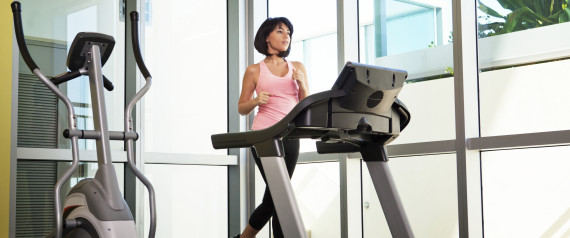
Tabata offer fun ways to keep moving and keep in shape
Tabata can work for everyone, with some adaptations:
Extract:
“I’m a 53 year old mom and love Tabata training because it is time
sensitive and very efficient, however, I need to make modifications
based on my fitness and health level,” she said. “For example, instead
of doing burpees with knee tuck jumps, I’ll do a burpee modification
with alternating knee lifts. I still get the physical challenge, but at
my own level. Tabata training, however, is not for everyone. Newbies to
exercise should heed caution, as this type of training requires the
intensity to be extremely challenging which could put a new exerciser at
risk for injury. Even for the experienced exerciser, if you’re not used
to participating in higher impact activities such as jumping or
bounding, you may need to work your way up to the type of intensity and
durations that Tabata training requires. Finally, Tabata training needs a
complete warm up and cool down period to allow your body the time it
needs to prepare and then recover.”
Full article : link
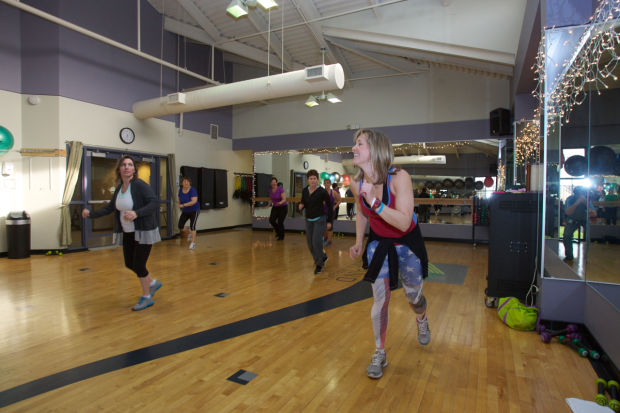
Sunday, 4 May 2014
MetCon: The Greatest Weight-loss Exercise in the History of Gravity
Full article:
A Tabata analysis and what it teaches us about Metcon
Let’s take Tabata for example - one of MetCon’s most well known protocols:
Usually performed with one, relatively simple exercise - such as a fan bike:
8 rounds
20 seconds of work
10 seconds of rest
at what would equal 170% of your Vo2max
Do you have any idea how mother truckin’ hard that is?
Let’s put this in perspective: V02 Max is the maximum amount of oxygen
you can consume during intense exercise. It is commonly measured on a
treadmill where by you gradually increase the speed/incline until you
damn near fall off the machine. THAT’S your Vo2max (ie - 100% of your
V02max.)
Now, of course, oxygen is not the only way the body produces energy. In
her infinite wisdom, mother nature gave us another energy system - sans
oxygen - that is more powerful but far less resolute, capable of
producing shorter bouts of impressive, explosive energy.
Imagine all systems go...the whole kit and caboodle...the baby, the
bathwater, and the kitchen sink - producing a max effort at what would
equal 170% of your Vo2max.
That’s powerful.
Now imagine sustaining that for 20 seconds.
Not easy.
Now imagine resting for 10 seconds, which by some magical time-warp
continuum ends up feeling like 1/10th of a second. And imagine repeating
that 7 times.
THAT’S Tabata.
Friday, 2 May 2014
Your guide to Tabata training
In this article, we can see again that the original Tabata training protocol is twisted...
"This form of training can make one lose anywhere between 800 to 1000
calories and even more, depending on the duration of the workout." -> the Tabata training is supposed to last 4mn only and consequently the total amount of calories burned during 4mn will be lesser. 800 to 1000 requires almost 1h for an average weighing man.
"Ideally, the basic form of this training is a minimum of 20 minutes
duration, but in my classes, we do it for a much longer duration and we
give modifications. I also do a much more advanced variation called Yoga
Tabata. Here, you hold a yoga pose during in between the workout breaks
instead of just resting,"--> If you can do 'Tabata' for 20mn, it's just a form of HIIT or just interval training. As well, Yoga poses will never bring you to an intensity of 170 vO2 max.
What do you think?
Full article here: http://www.dnaindia.com/lifestyle/report-your-guide-to-tabata-training-1980093
Sunday, 20 April 2014
4 Minutes to Fit: Tabata Interval Training
Is it Tabata or not?
Again, a few of the exercises proposed can reach the VO2max of 170%, if any.
What do you think?
http://www.huffingtonpost.com/rebecca-mahoney/health-and-fitness_b_5114012.html?utm_hp_ref=healthy-living

Again, a few of the exercises proposed can reach the VO2max of 170%, if any.
What do you think?
http://www.huffingtonpost.com/rebecca-mahoney/health-and-fitness_b_5114012.html?utm_hp_ref=healthy-living
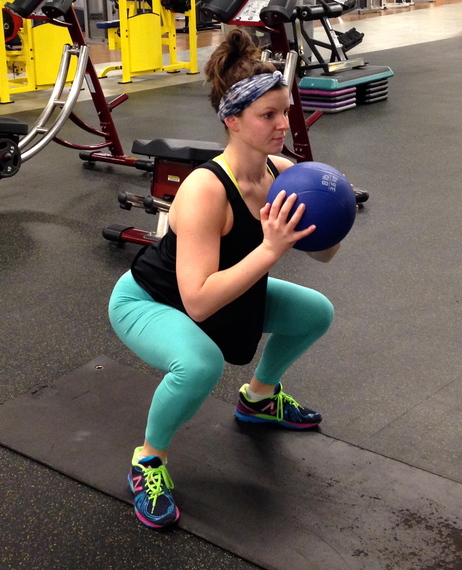
Sunday, 6 April 2014
Trainer Q&A: What's the Difference Between HIIT and Tabata?
Interesting question, is Tabata also HIIT?
There is a BIG MISTAKE in this statement below, can you spot it? My answer at the end of the article...
The Facts About Tabata
Work: 20 seconds
Rest: 10 seconds
Heart Rate: Above 100% (Subjects in the original study trained at 170% of VO2 max)
Total Workout Time: 4 minutes
The Facts About HIIT
Work: 1-2 minutes
Rest: 30 seconds to 2 minutes is a general range. I like a 1:1 or 1:2 ratio, meaning 1 minute work, 1 minute rest or 1 minute work and 2 minutes recovery. You can mix it up and do 2:1, meaning 2 minutes work and 1-minute rest. The harder the work interval, the longer the rest will have to be.
Heart Rate: 80-95% of maximum heart, according to American Council on Exercise (ACE)
Total Workout Time: 20-40 minutes
RESPONSE:
If your heart rate is above 100%, it means either your heart rate maximum was not properly estimated or..that you are going to die soon lol
Heart rate IS NOT EQUAL to VO2max...

There is a BIG MISTAKE in this statement below, can you spot it? My answer at the end of the article...
The Facts About Tabata
Work: 20 seconds
Rest: 10 seconds
Heart Rate: Above 100% (Subjects in the original study trained at 170% of VO2 max)
Total Workout Time: 4 minutes
The Facts About HIIT
Work: 1-2 minutes
Rest: 30 seconds to 2 minutes is a general range. I like a 1:1 or 1:2 ratio, meaning 1 minute work, 1 minute rest or 1 minute work and 2 minutes recovery. You can mix it up and do 2:1, meaning 2 minutes work and 1-minute rest. The harder the work interval, the longer the rest will have to be.
Heart Rate: 80-95% of maximum heart, according to American Council on Exercise (ACE)
Total Workout Time: 20-40 minutes
The Facts About Tabata
Work: 20 seconds
Rest: 10 seconds
Heart Rate: Above 100% (Subjects in the original study trained at 170% of VO2 max)
Total Workout Time: 4 minutes
The Facts About HIIT
Work: 1-2 minutes
Rest: 30 seconds to 2 minutes is a general range. I like a 1:1 or 1:2 ratio, meaning 1 minute work, 1 minute rest or 1 minute work and 2 minutes recovery. You can mix it up and do 2:1, meaning 2 minutes work and 1-minute rest. The harder the work interval, the longer the rest will have to be.
Heart Rate: 80-95% of maximum heart, according to American Council on Exercise (ACE)
Total Workout Time: 20-40 minutes
- See more at: http://www.mensfitness.com/training/cardio/trainer-qa-whats-difference-between-hiit-and-tabata#sthash.70qWGaHV.dpuf
Work: 20 seconds
Rest: 10 seconds
Heart Rate: Above 100% (Subjects in the original study trained at 170% of VO2 max)
Total Workout Time: 4 minutes
The Facts About HIIT
Work: 1-2 minutes
Rest: 30 seconds to 2 minutes is a general range. I like a 1:1 or 1:2 ratio, meaning 1 minute work, 1 minute rest or 1 minute work and 2 minutes recovery. You can mix it up and do 2:1, meaning 2 minutes work and 1-minute rest. The harder the work interval, the longer the rest will have to be.
Heart Rate: 80-95% of maximum heart, according to American Council on Exercise (ACE)
Total Workout Time: 20-40 minutes
- See more at: http://www.mensfitness.com/training/cardio/trainer-qa-whats-difference-between-hiit-and-tabata#sthash.70qWGaHV.dpuf
The Facts About Tabata
Work: 20 seconds
Rest: 10 seconds
Heart Rate: Above 100% (Subjects in the original study trained at 170% of VO2 max)
Total Workout Time: 4 minutes
The Facts About HIIT
Work: 1-2 minutes
Rest: 30 seconds to 2 minutes is a general range. I like a 1:1 or 1:2 ratio, meaning 1 minute work, 1 minute rest or 1 minute work and 2 minutes recovery. You can mix it up and do 2:1, meaning 2 minutes work and 1-minute rest. The harder the work interval, the longer the rest will have to be.
Heart Rate: 80-95% of maximum heart, according to American Council on Exercise (ACE)
Total Workout Time: 20-40 minutes
- See more at: http://www.mensfitness.com/training/cardio/trainer-qa-whats-difference-between-hiit-and-tabata#sthash.70qWGaHV.dpuf
Work: 20 seconds
Rest: 10 seconds
Heart Rate: Above 100% (Subjects in the original study trained at 170% of VO2 max)
Total Workout Time: 4 minutes
The Facts About HIIT
Work: 1-2 minutes
Rest: 30 seconds to 2 minutes is a general range. I like a 1:1 or 1:2 ratio, meaning 1 minute work, 1 minute rest or 1 minute work and 2 minutes recovery. You can mix it up and do 2:1, meaning 2 minutes work and 1-minute rest. The harder the work interval, the longer the rest will have to be.
Heart Rate: 80-95% of maximum heart, according to American Council on Exercise (ACE)
Total Workout Time: 20-40 minutes
- See more at: http://www.mensfitness.com/training/cardio/trainer-qa-whats-difference-between-hiit-and-tabata#sthash.70qWGaHV.dpuf
The Facts About Tabata
Work: 20 seconds
Rest: 10 seconds
Heart Rate: Above 100% (Subjects in the original study trained at 170% of VO2 max)
Total Workout Time: 4 minutes
The Facts About HIIT
Work: 1-2 minutes
Rest: 30 seconds to 2 minutes is a general range. I like a 1:1 or 1:2 ratio, meaning 1 minute work, 1 minute rest or 1 minute work and 2 minutes recovery. You can mix it up and do 2:1, meaning 2 minutes work and 1-minute rest. The harder the work interval, the longer the rest will have to be.
Heart Rate: 80-95% of maximum heart, according to American Council on Exercise (ACE)
Total Workout Time: 20-40 minutes
- See more at: http://www.mensfitness.com/training/cardio/trainer-qa-whats-difference-between-hiit-and-tabata#sthash.70qWGaHV.dpuf
Work: 20 seconds
Rest: 10 seconds
Heart Rate: Above 100% (Subjects in the original study trained at 170% of VO2 max)
Total Workout Time: 4 minutes
The Facts About HIIT
Work: 1-2 minutes
Rest: 30 seconds to 2 minutes is a general range. I like a 1:1 or 1:2 ratio, meaning 1 minute work, 1 minute rest or 1 minute work and 2 minutes recovery. You can mix it up and do 2:1, meaning 2 minutes work and 1-minute rest. The harder the work interval, the longer the rest will have to be.
Heart Rate: 80-95% of maximum heart, according to American Council on Exercise (ACE)
Total Workout Time: 20-40 minutes
- See more at: http://www.mensfitness.com/training/cardio/trainer-qa-whats-difference-between-hiit-and-tabata#sthash.70qWGaHV.dpuf
The Facts About Tabata
Work: 20 seconds
Rest: 10 seconds
Heart Rate: Above 100% (Subjects in the original study trained at 170% of VO2 max)
Total Workout Time: 4 minutes
The Facts About HIIT
Work: 1-2 minutes
Rest: 30 seconds to 2 minutes is a general range. I like a 1:1 or 1:2 ratio, meaning 1 minute work, 1 minute rest or 1 minute work and 2 minutes recovery. You can mix it up and do 2:1, meaning 2 minutes work and 1-minute rest. The harder the work interval, the longer the rest will have to be.
Heart Rate: 80-95% of maximum heart, according to American Council on Exercise (ACE)
Total Workout Time: 20-40 minutes
- See more at: http://www.mensfitness.com/training/cardio/trainer-qa-whats-difference-between-hiit-and-tabata#sthash.70qWGaHV.dpuf
Full article:- See more at: Work: 20 seconds
Rest: 10 seconds
Heart Rate: Above 100% (Subjects in the original study trained at 170% of VO2 max)
Total Workout Time: 4 minutes
The Facts About HIIT
Work: 1-2 minutes
Rest: 30 seconds to 2 minutes is a general range. I like a 1:1 or 1:2 ratio, meaning 1 minute work, 1 minute rest or 1 minute work and 2 minutes recovery. You can mix it up and do 2:1, meaning 2 minutes work and 1-minute rest. The harder the work interval, the longer the rest will have to be.
Heart Rate: 80-95% of maximum heart, according to American Council on Exercise (ACE)
Total Workout Time: 20-40 minutes
- See more at: http://www.mensfitness.com/training/cardio/trainer-qa-whats-difference-between-hiit-and-tabata#sthash.70qWGaHV.dpuf
RESPONSE:
If your heart rate is above 100%, it means either your heart rate maximum was not properly estimated or..that you are going to die soon lol
Heart rate IS NOT EQUAL to VO2max...

Saturday, 15 March 2014
The 10 Best YouTube Tabata Workouts To Get Fit Fast
In this article, there is a compilation of 10 videos about Tabata training..or sort of!
None of this video is demonstrating a proper intensity (170% of VO2max). It sounds as if the fitness industry just took the 20s/10s system and put any exercise... working abs for Tabata? Push-ups anyone?
What is your favorite "pseudo Tabata" training?
Full article:
Saturday, 1 March 2014
Tabata Training Is Here to Stay
In this article, one personal trainer applies Tabata training for his customers and admit its efficacy.
Extract:
After several weeks of incorporating tabata into my clients'
routines, along with my personal regimen, I noticed big differences in
performance levels and body composition. As with any HIIT session, your
body undergoes a heavy workload, which keeps your heart rate high and
body in the training zone that will burn fat and build strength.
Tabata
has changed my outlook on interval training. The short burst of
activity followed by even shorter rest allows you to put your body in a
state of high level physical pursuit. It's mental along with physical
in that you must have the strength to perform the task and be able to
withstand the urge to give up. Try this: Perform a tabata circuit at
home or at the gym with just body weight exercises. Start with push ups
for eight rounds at the 20 seconds work/10 seconds rest ratio. When
finished, grab some water and rest for one minute. Then clock yourself
for eight rounds of sit ups. When done, water up for one minute. Last
exercise in the circuit, perform jump squats for eight rounds at the 20
second/10 second work to rest interval. This will put your body in the
metabolic training mode that burns fat, tones your body and helps you
get the results you want.
Full article:
Subscribe to:
Posts (Atom)